Step-by-Step Guide
How to Perform Umrah
A complete step-by-step guide for Bangladeshi pilgrims.
Complete Guide to
Performing Umrah
Discover the essence of devotion with our detailed step-by-step instructions on how to perform Umrah from Bangladesh. Follow each step carefully for a spiritually fulfilling journey.

Sharia-compliant guidance verified by our scholars
The 8 Steps of Umrah

The Niyyah — Pure Intention
The Niyyah should be made at the Miqat or very near it. It is advised (Mustahabb) to declare your desire both out loud and internally. Your intention must be purely for the sake of Allah.
Niyyah — Arabic
اللَّهُمَّ إِنِّيْ أُرِيْدُ الْعُمْرَةَ فَيَسِّرْهَا لِيْ وَتَقَبَّلْهَا مِنِّيْ
O Allah, I want to perform Umrah, so accept it from me and make it simple for me.

Ihram — Ceremonially Plain Clothing
Pilgrims must cleanse and purify themselves before entering Ihram. Men wear two unstitched white garments; women wear loose modest clothes. It is Sunnah to offer two Rakahs of Salah before assuming Ihram.
For Men
Two white unstitched garments
For Women
Loose modest clothing (any color)
Reciting Talbiyah
Recite the Talbiyah after making your Niyyah to confirm your purpose and enter the state of Ihram. Both Hanafi and Maliki schools agree that Talbiyah is Wajib.
Talbiyah — Arabic
لَبَّيْكَ اللهُمَّ لَبَّيْكَ — لَبَّيْكَ لَا شَرِيْكَ لَكَ لَبَّيْكَ
Labbayk allahumma labbayeek, labbayeeka l'aa sharika laka labbayeek, innal-ḥamda wan-ni'mata, laka wal-mulk, l'aa sharika lak.
Tawaf — Encircling the Holy Ka'abah
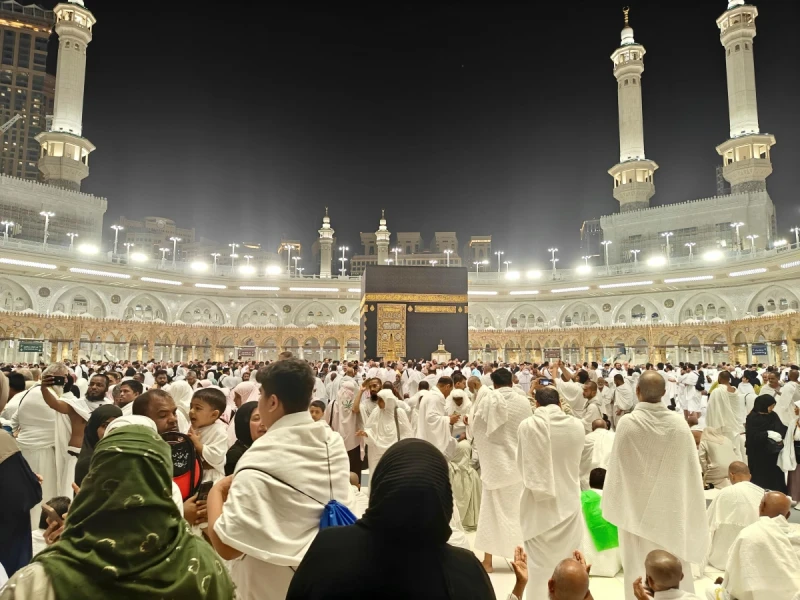
Perform seven rounds of circumambulation around the Kaaba in an anti-clockwise direction, starting and ending at the Black Stone (Hajar al-Aswad). This ritual represents unity and devotion to the Almighty.
- Start from the Black Stone (Hajar al-Aswad)
- Move in an anti-clockwise direction
- Complete 7 full rounds
- Pray two Rakahs at Maqam Ibrahim after
Sa'i — Safa & Marwa
Walk seven times between the hills of Safa and Marwah. This commemorates Hagar's search for water and signifies perseverance and faith in the face of difficulty.
- Must start at Safa and end at Marwa
- Must be performed after completing Tawaf
- Perform seven complete rounds on foot
- Must remain in Ihram until Sa'i is complete
Halq or Taqsir — Shaving / Trimming Hair
Complete Umrah by shaving the head (for men) or trimming hair (for women). This represents humility and renewal in the service of Allah. It is more virtuous for men to shave completely.
Halq (Men)
Shaving entire head is more virtuous
Taqsir (Women)
Trim a fingertip length of hair
Visiting Madinah — Masjid an-Nabawi
If your journey allows, visit the blessed city of Madinah and offer prayers at the Prophet's Mosque (Masjid an-Nabawi). Pay your respects at the Prophet Muhammad's (PBUH) grave and visit the sacred sites.
Additional Activities During the Journey
-
I'tikaf: Spiritual retreat at the Grand Mosque during Ramadan for increased rewards
-
Mount Arafat: If Umrah coincides with Hajj season, participate in the standing at Arafat
-
Additional Tawaf & Sa'i: Extra rounds to express gratitude and devotion
Frequently Asked Questions
Umrah has 4 main pillars: Ihram, Tawaf, Sa'i, and Halq or Taqsir. Start by entering Ihram at the Miqat, making Niyyah, and reciting Talbiyah. Proceed to Makkah, perform Tawaf around the Kaaba, pray two Rakahs at Maqam Ibrahim, drink Zamzam water, perform Sa'i, and then cut/shave hair.
Gather travel documents, physically prepare with light exercises, learn the rituals and etiquettes, increase acts of worship, seek forgiveness before departure, and consult our Sharia advisors for proper guidance.
While in Ihram, avoid cutting hair or nails, using scents, hunting, engaging in intimate relations, arguing, or using foul language. Maintain purity of body and spirit throughout your journey.
Various duas can be recited during different stages of Umrah — the Niyyah dua, Talbiyah, duas during Tawaf, duas at Safa and Marwah. Personal prayers are also encouraged throughout your journey. Consult our Sharia advisor for specific guidance.
Yes, Umrah can be performed at any time of the year except on the 9th, 10th, 11th, 12th and 13th of Dhul Hijjah (during Hajj). The most rewarding time is during Ramadan.
Need Guidance?
Speak With Our Sharia Advisor
Get personalized guidance for your Umrah journey from our qualified consultants.
Get Consultation View Packages